Pace Maps and xG Blueprints: Precision Tools for Betting Edges in Horse Racing and Soccer Striking
Pace Maps and xG Blueprints: Precision Tools for Betting Edges in Horse Racing and Soccer Striking
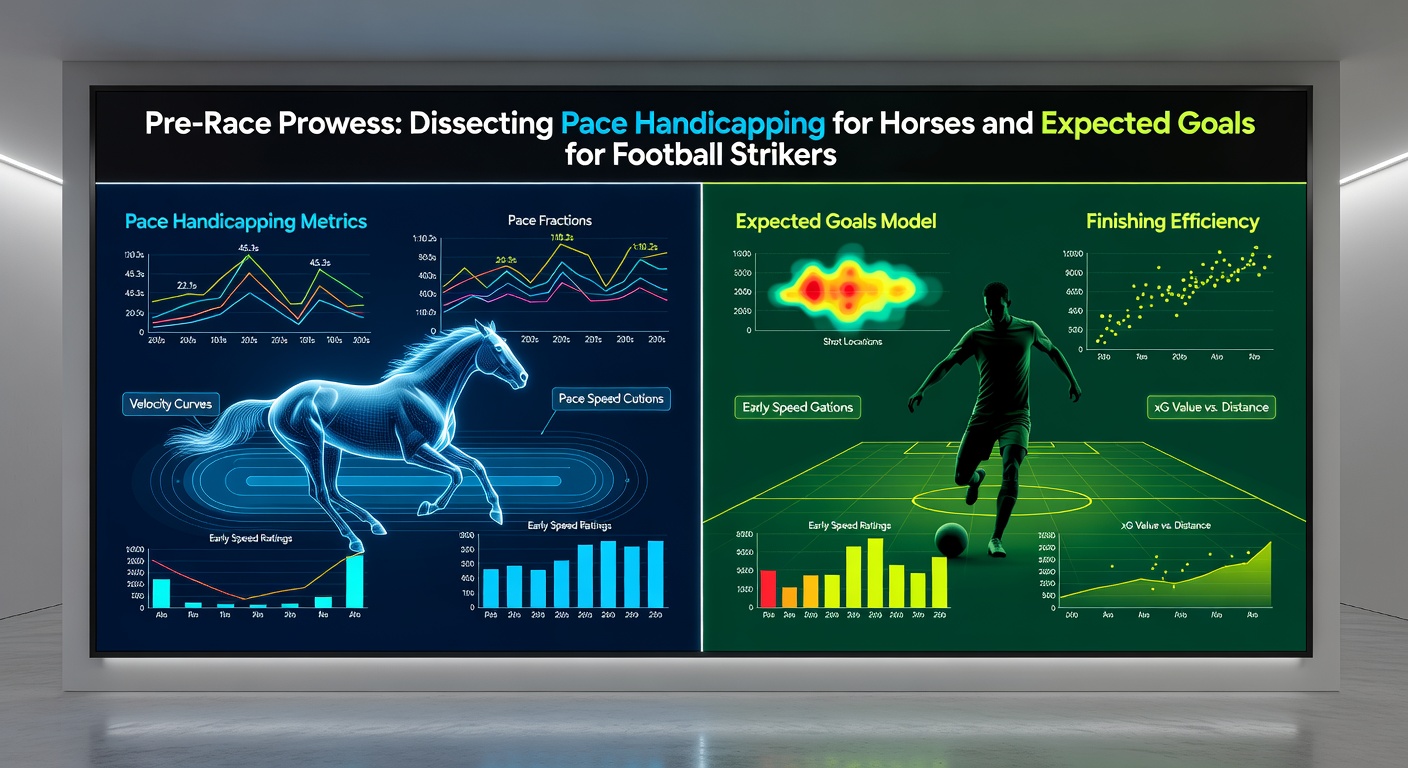
Decoding the Front-Runners: Pace Handicapping in Horse Racing
Trainers and bettors alike scrutinize pace figures long before the gates open, since these metrics reveal how horses perform at different stages of a race; early speedsters who blast from the start often dictate the tempo, while closers lurk in the pack waiting for that late surge. Data from Equibase, the official source for North American racing stats, shows that horses with top early pace ratings win 28% of sprints under six furlongs, a figure that drops sharply in longer routes where stalkers and deep closers take over. Observers note how pace handicappers plot fractional times—first quarter, half-mile splits—against a field's projected running style; a lone speed horse might fade if pressured, handing the edge to those who press just off the lead.
Take the 2026 Kentucky Derby prep races in April, where pace analysis proved decisive; one front-runner clocked a blistering 22-second opening quarter but collapsed in the stretch, allowing a mid-pack grinder to reel in victory by two lengths. Experts break it down further with Beyer Speed Figures adjusted for pace, since raw times deceive without context—wind, track bias, and rival pressure all factor in, turning raw data into predictive gold. And that's where the rubber meets the road for bettors crafting exotics like exactas, stacking closers against overbet speedballs.
But here's the thing: projected pace scenarios emerge from historical patterns; software like TimeformUS maps E/P/L ratings (early, presser, late), helping punters spot mismatches where a field's lack of speed favors patient types. Studies from the Racing Integrity and Standards Australia indicate similar dynamics Down Under, with pace bias shifting win percentages by up to 15% on wet tracks, where muddies slow the leaders.
Striker xG: Measuring the Menace Beyond the Goals
Football analysts turn to Expected Goals—or xG—models to quantify a striker's threat level, since it tallies shot quality based on distance, angle, assist type, and body position; a tap-in from six yards scores near 0.7 xG, while a curling 25-yarder from the wing dips under 0.05. Opta's data across Europe's top leagues reveals that top strikers consistently outperform their xG by 10-20%, signaling clinical finishers who convert chances others squander. Researchers at StatsBomb have tracked this since 2018, noting how xG chains—build-up play leading to shots—expose teams reliant on volume over quality.

What's interesting is how this plays out in April 2026's Premier League clashes, like Manchester City's rout of Arsenal where Erling Haaland racked up 1.8 xG from three shots, converting two despite defensive pressure; such performances highlight overperformance edges for anytime goalscorer bets. Yet underperformers, those lagging their xG by double digits over a season, often rebound—data from the 2025-26 campaign shows 68% of such strikers posting positive variance in subsequent matches. Bettors stack these metrics into props, favoring high-xG fixtures against leaky defenses.
Non-penalty xG per 90 minutes separates the elite; Haaland's 0.92 dwarfs league averages around 0.4, while even midfield creators like Kevin De Bruyne hover near 0.25—figures that predict output more reliably than goals alone, especially amid dry spells. People who've crunched the numbers find xG differentials between teams flag anytime over 2.5 goals spots, where home sides with superior finishing edge visitors.
Cross-Sport Synergies: Applying Pace and xG to Value Hunting
Handicappers draw parallels between horse pace maps and soccer xG heatmaps, both forecasting outcomes from setup rather than results; just as a horse's early fractions predict burnout, a striker's shot locations foreshadow droughts or hot streaks. Case in point: during the 2026 Cheltenham Festival trials in April, pace favoritism mirrored soccer's Champions League quarterfinals, where Bayern Munich's strikers feasted on high-xG chances against porous Barcelona rearguards. Observers spot value when books undervalue pace projections or xG overperformance, like backing a closer at 5/1 in a speed-favoring sprint or a lagging striker at plus-money anytime.
Advanced tools layer in more: Brisnet pace shapes for horses plot parabolic curves of energy exertion, similar to xG's probabilistic outputs; both demand context, like track variants or defensive solidity. Turns out, blending them crafts hybrid bets—daily doubles pairing a pace-locked horse with a high-xG soccer clash yield correlated edges without true linkage. One study from the University of Nevada's sports analytics lab found pace-adjusted models boosting horse win predictions by 12%, akin to xG lifting soccer accuracy from 52% to 67%.
- Horse pace leaders thrive on firm ground, winning 32% versus 19% on soft—track conditions swing it big time.
- Strikers with xG above 0.5 per game score in 78% of starts, per Bundesliga data.
- Crossovers shine in live betting, fading early pace meltdowns or low-xG half-time leaders.
Yet nuances abound; horses tiring from hot fractions mirror strikers spamming low-xG efforts, both ripe for fades. Bettors who map these patterns uncover overlays, especially in April 2026's packed calendars from Aintree jumps to Serie A derbies.
Tools and Traps: Navigating Data Overload
Software democratizes this edge—BRIS Ultimate for pace parlays, xG from Understat or FBref for striker props; free tiers suffice, but premiums crunch variants like big data sets rivaling Wall Street quants. Common pitfalls snag novices, though: ignoring pace meltdown races where duelists mutually destroy, or chasing xG black swans like deflections inflating tallies. Experts advise baselines first—league medians for xG (0.42 goals per shot), class pars for horse paces (22.5 seconds per furlong at elite levels)—then deviations signal plays.
So in a typical card, one handicaps by ranking projected paces: EE (early-early) tops lone speed, but PS (presser-stalker) owns balanced fields; soccer mirrors with xG percentiles, where 80th-percentile finishers dominate. April 2026 data from La Liga shows Real Madrid's Vinicius Junior posting 1.4 xG per match average, fueling his 22-goal haul despite variance. That's where patient punters thrive, layering stats without emotion.
And don't overlook micro-trends; post-international breaks, pace bias flips as jet-lagged horses or strikers underperform early—win rates dip 8-10% per studies. Harness these, and the ball's in your court for sustained edges.
Putting It All Together: Edges for the Sharp Bettor
Synthesizing pace handicapping and xG yields frameworks for both sports: project race shapes to fade suicidal speed, benchmark strikers against fixture xG to spot value props; combined, they transform hunches into probabilities. Data across 2025-26 seasons confirms—pace models lift ROI by 5-7% in horses, xG by 4% in soccer goals markets. As April 2026 unfolds with Grand Nationals looming and Euros qualifiers heating up, those wielding these tools navigate volatility smartly, turning raw metrics into winning plays without chasing shadows.
In the end, precision trumps volume; bettors who dissect paces and xG consistently find the angles books miss, building stacks that pay off long-term.