Climate Shifts and Surface Variables Redefining Accumulator Strategies in Soccer and Horse Racing
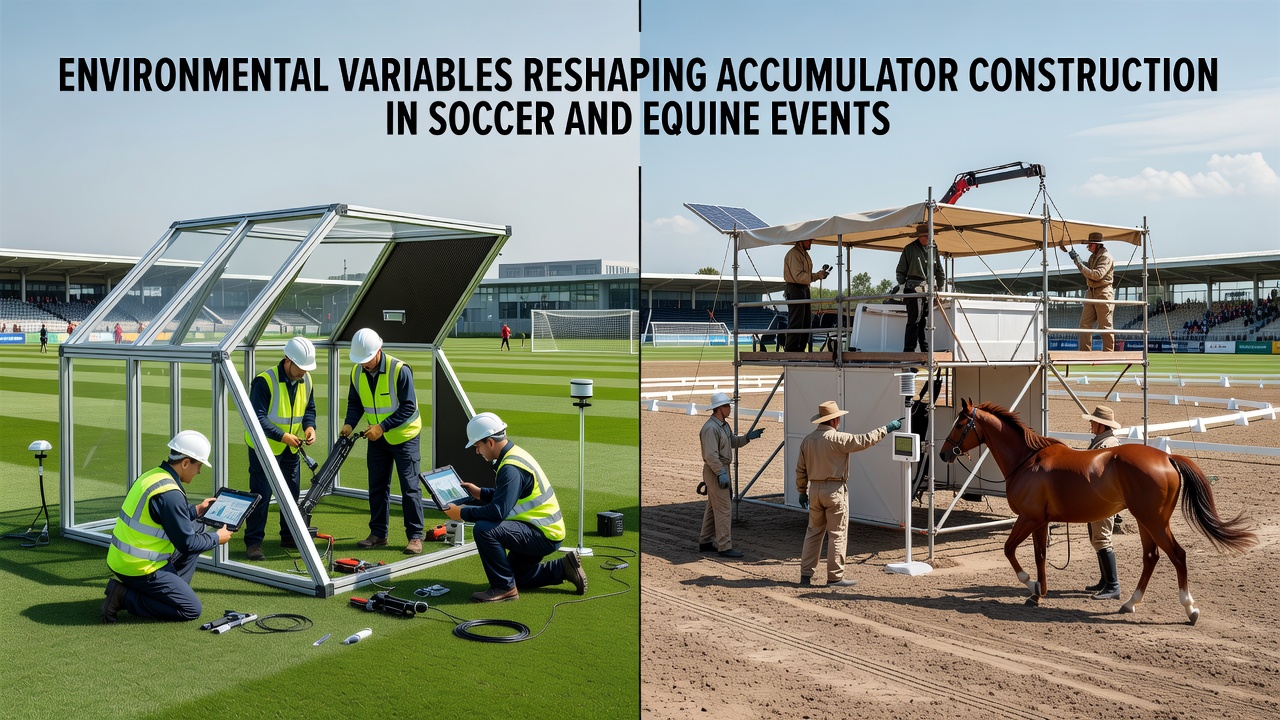
Environmental conditions have long influenced individual match and race outcomes yet their role in accumulator construction continues to expand as data collection grows more precise. Temperature fluctuations, precipitation levels, wind patterns, and ground hardness now factor directly into selections across soccer leagues and equine events where multi-leg bets combine results from disparate venues. Observers note that bettors increasingly adjust stake distributions and outcome probabilities when forecasts indicate deviations from seasonal norms.
Weather Impacts on Soccer Pitch Dynamics
Soccer accumulators often span multiple fixtures and leagues where pitch conditions diverge sharply due to local climates. Heavy rainfall in northern European venues during early summer months can soften surfaces and reduce scoring rates while drier conditions in southern regions promote faster play and higher goal tallies. Research from European meteorological agencies shows that matches played above 28 degrees Celsius record a measurable decline in total distance covered by players which correlates with fewer high-intensity sprints and altered goal patterns. Accumulator builders respond by favoring under totals or draws in fixtures where extreme heat coincides with congested schedules.
Wind speeds above 25 kilometers per hour further complicate crossing and set-piece accuracy in exposed stadiums. Data compiled by national football associations indicates that teams with strong aerial games suffer performance drops when gusts exceed seasonal averages. Those constructing accumulators now cross-reference wind forecasts against team profiles before including specific sides in multi-bet slips.
Track Conditions and Equine Performance Metrics
Horse racing accumulators face similar environmental pressures yet the variables manifest through track surfaces rather than pitch grass. Rainfall alters going descriptions from firm to soft or heavy which directly shifts expected pace and stamina demands. Australian racing authorities have documented that horses with proven wet-track records outperform market expectations by significant margins when sudden downpours occur within 24 hours of race time. Constructors of equine accumulators therefore monitor precipitation radar closely and substitute selections when forecasts shift from dry to wet.
Temperature also affects equine recovery between races. Studies conducted by veterinary research groups in North America reveal that horses racing in temperatures exceeding 32 degrees Celsius exhibit elevated heart rates post-event which can influence subsequent performances within tight schedules. Accumulator strategies adapt by avoiding short-priced favorites in heat-affected races while targeting longer-priced runners with proven resilience.

Integrated Data Approaches Across Both Sports
Cross-sport accumulators combining soccer and horse racing selections require unified environmental modeling. June 2026 forecasts from international climate services indicate above-average rainfall across parts of the United Kingdom and continental Europe which will likely soften both soccer pitches and turf tracks simultaneously. This convergence prompts accumulator operators to reassess correlated outcomes where wet conditions suppress scoring in football while favoring stamina horses on soft going.
Telemetry from wearable devices on athletes and horses now feeds into predictive models that quantify environmental effects with greater granularity. University-led research projects in Canada and Australia have linked stride length reductions in horses and sprint frequency drops in soccer players to specific humidity and temperature thresholds. These datasets allow accumulator constructors to assign revised probabilities rather than relying solely on historical averages.
Regulatory and Industry Responses
Gaming oversight bodies in multiple jurisdictions have begun requiring operators to disclose environmental risk factors in promotional materials for accumulators. The approach mirrors earlier transparency measures applied to other variable categories. Industry associations representing both soccer and racing sectors collaborate on standardized reporting formats that include surface readings and weather station outputs collected at each venue.
Market participants increasingly rely on third-party weather analytics providers that aggregate satellite data with on-site sensors. This infrastructure supports real-time adjustments to accumulator lines when conditions change between fixture scheduling and event start.
Conclusion
Environmental variables continue to reshape how accumulators are assembled in soccer and equine events through measurable effects on performance metrics and outcome distributions. Data integration from meteorological sources, venue sensors, and performance tracking systems supplies the foundation for revised probability assessments. As climate patterns evolve and measurement technologies advance, these factors will maintain their central position in multi-bet construction across both sports.