Altitude Mapping for Soccer Performance: Insights for Wager Strategies
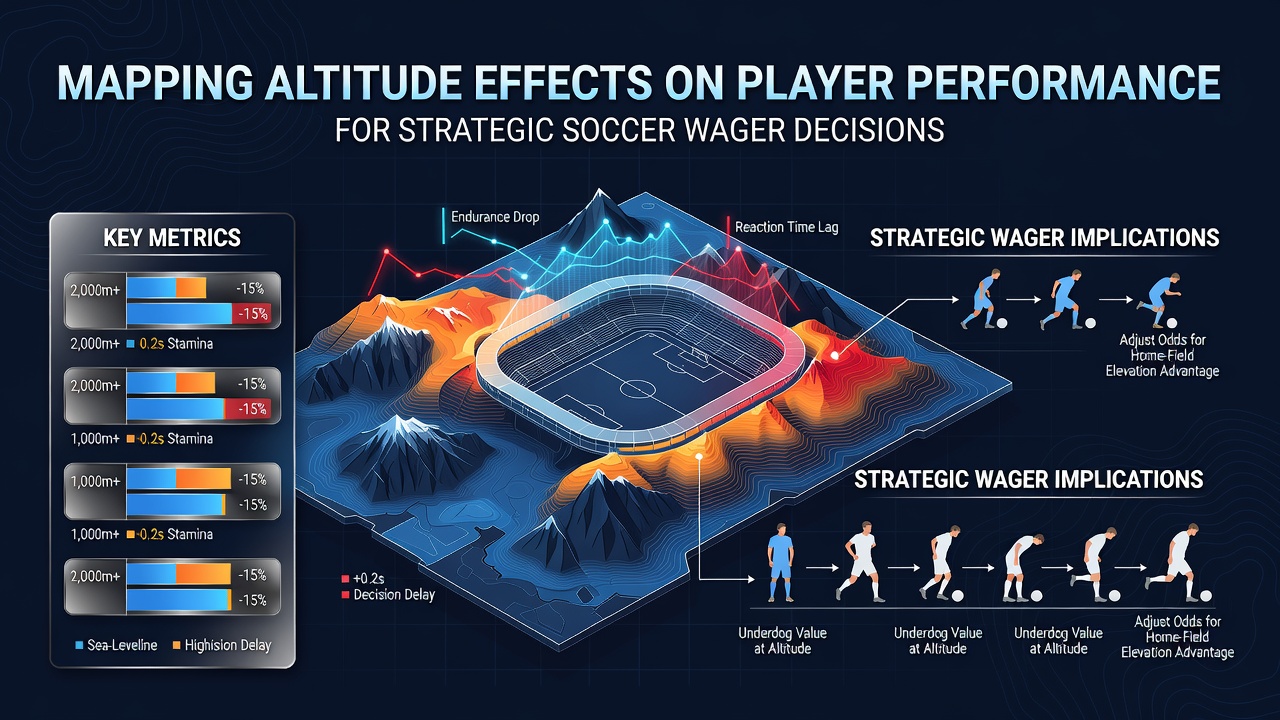
High-altitude venues create measurable shifts in soccer player output that betting analysts track through performance databases and physiological studies, and these patterns shape decisions on match totals and handicap lines. Venues above 2,000 meters reduce oxygen availability which leads to quicker fatigue onset, altered sprint distances, and changes in ball possession metrics according to match tracking systems deployed across South American and European competitions. Teams traveling from sea level often record 15-20 percent drops in high-intensity running during the second half while local squads show smaller declines because of chronic adaptation.
Physiological Responses at Elevation
Researchers have documented how partial pressure of oxygen falls with rising elevation and forces athletes to increase breathing rates and heart output to maintain energy production, yet these compensations cannot fully offset the deficit during 90-minute contests. Studies from sports physiology labs reveal that maximal oxygen uptake declines by roughly 7 percent for every 1,000 meters gained, which directly correlates with fewer successful passes and reduced shot accuracy in the final 30 minutes. Players also experience elevated blood lactate levels earlier in games played above 2,500 meters, prompting coaches to adjust substitution patterns and formation choices that influence over/under totals.
Match Data Patterns Across Venues
Analysis of fixtures in Bolivia, Ecuador, and Mexico shows home teams win at rates 8-12 percentage points above their season averages when matches occur at elevations exceeding 2,800 meters, while visiting sides concede more goals after the 60-minute mark. Data collected during the 2025 Copa Libertadores cycle and carried into 2026 qualifiers indicates average goals per game rise slightly in the first half but drop in the second half because of conservative pacing adopted by both sides. Observers note that teams with fewer than three days of acclimatization time suffer larger performance gaps than those arriving a week early, and this timing variable appears in pre-match reports circulated among professional betting syndicates.
Strategic Applications for Wager Planning
Mapping tools now integrate GPS and wearable sensor outputs with historical match files to forecast how altitude will affect expected goal models and player availability lists. Analysts compare baseline sea-level statistics against altitude-adjusted projections to identify value on team totals and player prop markets, especially for midfielders who log the highest distances. One study released by the International Journal of Sports Physiology and Performance tracked 14 professional clubs across two seasons and found that visiting teams from low-altitude regions recorded 22 percent fewer recoveries in the defensive third when playing above 2,500 meters. Bettors incorporate these differentials into live betting frameworks by monitoring early possession and pass completion rates that signal emerging fatigue trends.
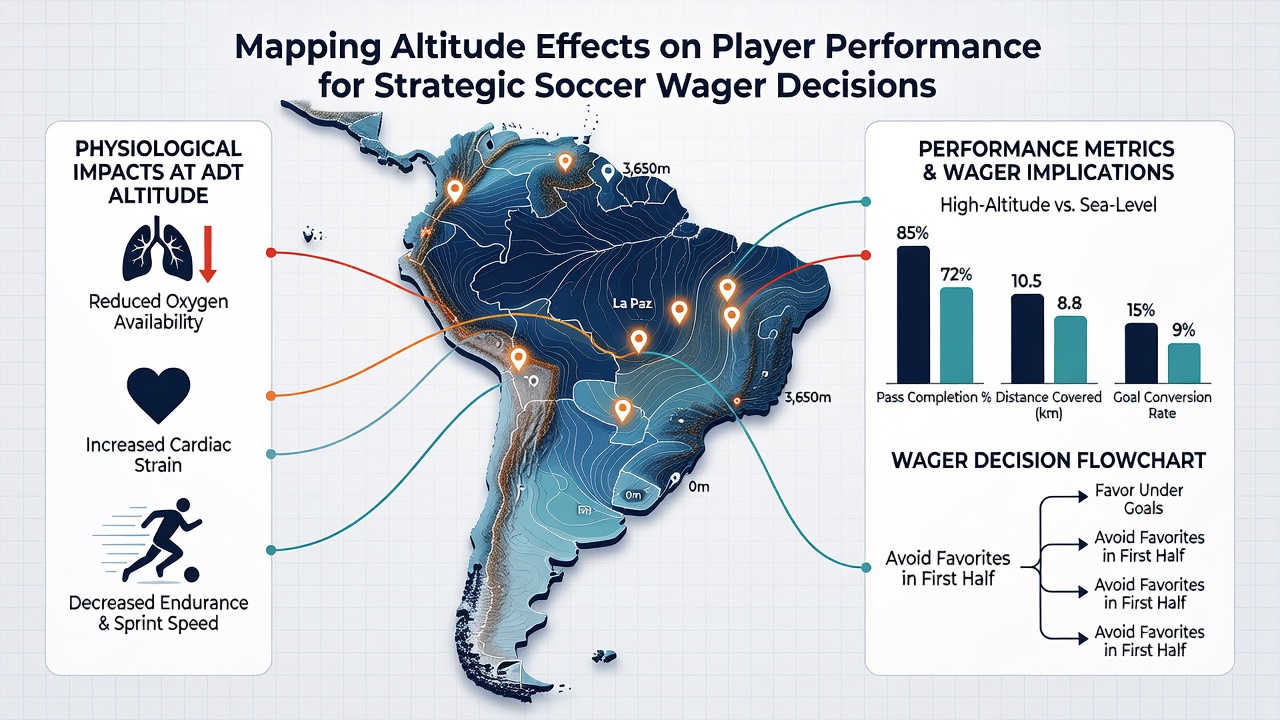
July 2026 schedules include several South American qualifiers at stadiums in La Paz and Quito where elevation exceeds 3,000 meters, and advance modeling already factors in the reduced recovery windows between midweek club fixtures and national team travel. Operators tracking these variables adjust line movement thresholds because sharp action tends to cluster on under totals once second-half data streams confirm the expected drop in intensity. Teams that rotate squads aggressively before high-altitude trips preserve key performers for later stages, which alters squad depth projections used in handicap calculations.
Acclimatization and Squad Management Factors
Coaches employ altitude tents and simulated training environments weeks before travel, yet field results show that artificial preparation narrows but does not eliminate performance gaps against fully adapted opponents. Medical staff monitor hemoglobin levels and hydration markers because dehydration accelerates at elevation and compounds muscle fatigue, leading to higher injury substitution rates in the closing stages. Data from CONMEBOL competitions released in early 2026 highlight that matches scheduled in the afternoon produce larger second-half goal differentials than evening fixtures, likely because peak daytime temperatures interact with lower oxygen levels to accelerate exhaustion.
Betting syndicates cross-reference these environmental variables with travel itineraries and recent form lines to refine accumulator selections across multiple high-altitude fixtures. The same datasets also feed into player-specific models that downgrade expected contributions from attackers who rely on explosive movements rather than positional play. Observers tracking line movement note that markets react quickly once official team sheets confirm the presence or absence of key personnel who have logged limited minutes at elevation in prior seasons.
Conclusion
Altitude mapping integrates physiological measurements, historical match outcomes, and squad logistics into a single framework that informs wager construction across soccer markets. Continued collection of wearable telemetry and refined expected goal adjustments will sharpen these projections as more clubs adopt standardized tracking protocols ahead of 2027 competitions.